

EN 795: Personal Fall Protection Equipment - Alsipercha & Alupercha in Practice
A fall arrest system is equipment designed to stop a worker’s fall from height. Complying with EN 795 standards, the Alsipercha and Alupercha protect those working in high-risk areas and serves as the last line of defence when other fall protection methods aren’t feasible.

What is a Fall Arrest System and How Does it Support Fall Protection?
A fall arrest system refers to a combination of equipment, components and systems designed to stop a worker’s fall from height. These systems must comply with EN 795 and are specifically installed to protect individuals working in elevated environments where fall hazards exists. Fall arrest is considered the last line of defence and it should only be used when other fall protection methods such as Steel Mesh Barriers or Catchfans, are not feasible.
An effective fall arrest system should:
- Keep the free fall distance as short as possible.
- Reduce the impact forces experienced by the worker.
- Prevent the worker from striking surrounding structures or obstacles.
- Limit swing hazards (also known as the pendulum effect).
It is essential to always use fall arrest systems that comply with local regulations and recognised industry standards. In the UK BS EN 795:2012 is the standard governing anchor devices for fall protection. The standard outlines performance requirements and test methods for single-user anchor devices that are either removable or temporary in nature.
EN 795 defines five main types of anchor devices:
- Type A: Fixed anchor points requiring a structural anchor or fixing element.
- Type B: Temporary, removable anchor points that leave no trace after use (e.g., webbing slings).
- Type C: Horizontal lifeline systems.
- Type D: Rail-based anchor systems.
- Type E: Deadweight anchor devices.
The Alsipercha and Alupercha systems fall under Type B anchor devices, as they are temporary, removable solutions designed to safeguard workers from falls at height during construction, vehicle unloading or machine maintenance activities. Type B anchorages are designed for fall protection in areas with vertical drop hazards. They must support a minimum static load of 15 kN and withstand a shock load of 12 kN.


Introduction to the Alsipercha, Alupercha & Typical Uses
The Alsipercha is a steel overhead fall protection system and the Alupercha is a lightweight, aluminium design weighing just 19 kg allowing it to be installed single-handedly without a crane. Both systems have been developed to meet the requirements outlined by Type B within BS EN 795:2012, ensuring compliance with the recognised regional standard for active fall-protection systems.
Typical Applications:
- Slab formwork operations.
- Work in perimeter construction zones.
- Loading and unloading trucks.
- Installation of panels, stairwells, risers and perimeter protection systems.
- Machine maintenance.
Key features of the Alsipercha & Alupercha include:
- Overhead anchorage point with built-in energy absorber that reduces impact forces on the user and structure improving overall site safety.
- Smooth 360° rotation, covering a safe working area of up to 125 m².
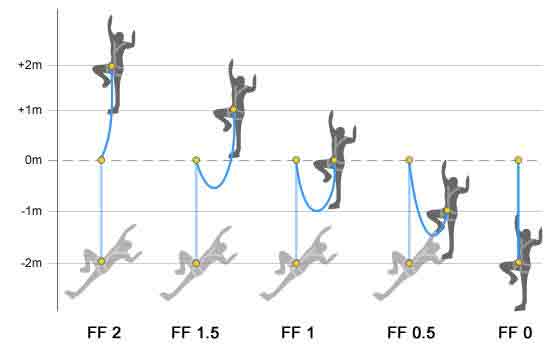
- Fall Factor (FF) 0 meaning that the anchorage point is always directly overhead, minimising free-fall distance. This setup reduces forces on both the worker and structure, enhancing safety. It also lowers the risk of swing falls by keeping the worker aligned with the anchor.
Learn how HAKI systems have improved site safety in real projects on our Case Studies.
Core Elements & Accessories
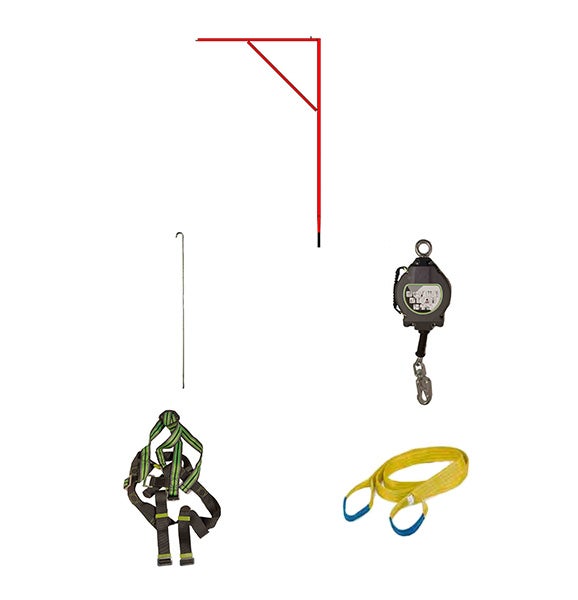
- Alsipercha / Alupercha Body
Main anchorage point
For reaching the next unit
Blocks the descent in the event of a fall
PPE to be worn by the user
- Sling
For installation with crane
Different Installation Options
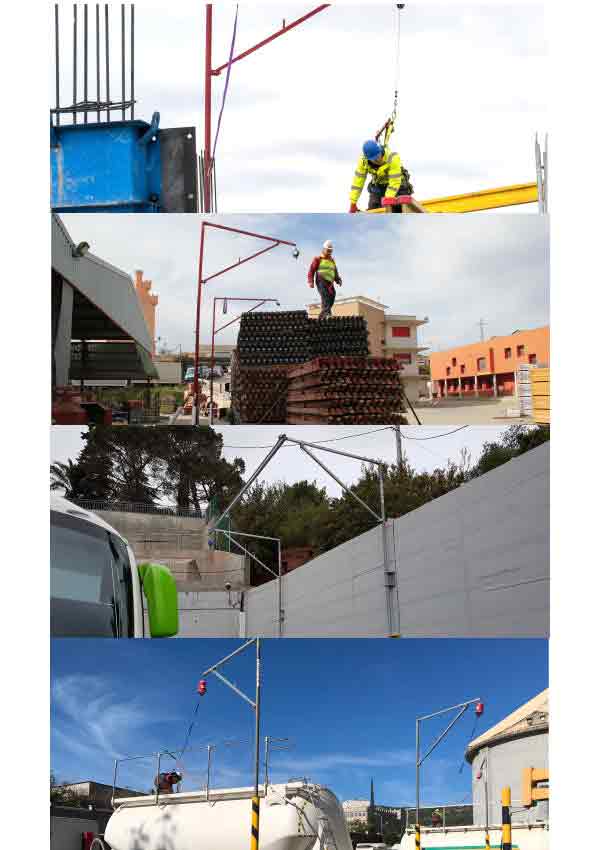
These systems offer multiple installation methods, ensuring adaptability to various worksite conditions (top 4 pictured left):
Installed with a CE-marked housing tube cast in concrete; the built-in leveller ensures precise vertical alignment and safety.
- MF Counterweight Structure:
Uses a truck as a counterweight for quick setup on any surface, ideal for large or temporary sites.
- Post for Reduced Spaces:
Compact 350 mm base fits tight or confined spaces where standard setups won’t.
- Wall Bracket:
Anchors to reinforced concrete walls with adjustable height for different structures.
Portable system with 25 kg counterweights for easy setup, relocation, and temporary use.
- Tripod:
Offers a 6.5 m anchorage for uneven or open surfaces without wall or column attachment.
- Column Clamps:
Adjustable 120–450 mm clamps attach to steel columns, accommodating structural variations.
- Rail System:
Rigid 6 m lifeline for two users, with fall arresters for continuous protection.
Ready to Enhance Safety?
For technical installation resources and safety documentation, explore our Resources and Guides.
Contact HAKI UK today to discuss which fall arrest system or overhead fall protection setup is best suited to your site.